Tuesday, May 8, 2012

Ashvin Kumar Being nominated for an Oscar in 2005 .....trying to distribute his film "the forest " for around 5 years he was unable to find even a single distributor since "Distributors want stars"


Being nominated for an Oscar is like being knighted. Oscar-nominated becomes a courteous prefix to one’s name. So when Ashvin Kumar was nominated for one in 2005 for his film ‘Little Terrorist’, he was on a different high. Anyone would be. But he went through a humbling experience when he completed his very next film- a man-eater based thriller called ‘The Forest’. While the film was shot with an international crew, it had an Indian setting. But for some reason he didn’t find a buyer for 5 years. Now that the film is finally releasing, the director is relieved and claims to have learnt a lot in the period that he waited for the film to reach the screens. He admits that he had, at several points, come to believe that the film would never release. He talks to Kunal Guha about the ideology behind his craft and why Indian distributors, despite the evolution of Indian cinema, continue to evaluate films through a rigid metric and fail to see a film for its true merit.


What was the core idea behind making ‘The Forest’?

I have always been traveling to the many forests in India right from when I was as a kid and my parents always wanted me to see animals in their natural habitat. So when I thought about making a thriller, it seemed like the ideal setting. Then I wanted to explore man’s interference with nature and how nature fights back.


Do you personally enjoy thrillers or movies that bring one to the edge of the seat?

I can’t watch horror films, they scare me a lot. But I do enjoy thrillers. My favourites would be all the Alfred Hitchcock classics and among recent films- ‘Panic Room’ was one that was a pure thriller. Then I love thrillers based on human drama like ‘Knife in the Water’ and there are so many of them.


While there isn’t a formula to make a perfect thriller, what are the elements that need to go into one?

There’s only one element that applies to all thrillers. The audience must want to ask that one question and if they don’t ask that one basic question then you’ve failed as a filmmaker. The audience must want to ask from moment to moment, second to second, scene to scene- what’s going to happen next. The job of the filmmaker is to keep the audience engaged and make them ask that question constantly.


Which are your favourite thrillers based on man-eaters?

I don’t know many to say that I like them. I am not saying this because I’ve made this film. But I am saying that because I don’t think any film has successfully translated the phenomenon of a man-eater on the big screen. Many documentaries have done it but not films. My film ensures that it keeps you at the edge of your seat.


Do you think any myths about filmmaking were shattered while working on this project?

The very fact that my film didn’t release for five years completely changed how I looked at films and what I wanted to do in filmmaking. For the first film I made, I was nominated for an Oscar and that’s a huge high. And then I got to make a film of this scale which is ambitious to begin with. My career had just taken off and when I got to know that no one in Bombay wanted to release it for several years, I had to disassociate myself with the film completely and resign myself to the fact that it may never release. I had to do that to move on. I had to tell myself that all the hard work and money and pain and love that had been put into it had to go and that was the most painful thing to reconcile with.


Did you ever consider going back to the film and trying to figure out a different pitch to sell it?

Oh, we did all that. What you’re going to see in cinemas now is a much re-edited version. We dubbed it in Hindi and did quite a bit of other things. All that introspection about ‘I’m never going to cut anything’ and then looking at it again and saying, ‘let me re-cut it to make it more effective’.


Were there parts that you loved that had to go?

I think what happened was, when I came back to it, it was very obvious what had to go. I am an editor myself and have edited all my films except one and I am very ruthless with my material. There were parts that we spent a lot of time filming but that doesn’t mean that it has to be in the film. What is going to be in the film is what is going to move the story forward. Again, coming back to the audience wanting to ask ‘what’s going to happen next’ is essential. If the audience begins to look around and check their blackberries, then you’ve lost them. So you need to cut out all that and keep the scenes that you need to move the story forward. Actually, this is a very good lesson in writing screenplays as well. Now, in hindsight, I am able to write screenplays which are far leaner, much less obvious, visual and have much more to do with the audience’s ability to join the dots rather than manually feed them with information. There are only a few moments which are needed. And the choice of those moments is very particular as you need to predict what the audience wants to see about a particular character.


What were the challenges in working with your film’s lead star- the man-eater?

We didn’t work with a real man-eater. We did work with two leopards who were trained. We shot their parts in Thailand and when we were filming, Animal Planet did two episodes about the experience of shooting with leopards and they did capture most of our obvious challenges. The first thing that one notices is that leopards do pretty much whatever they want to do and you have to arrange your shots at the spur of the moment. We had already filmed a lot of shots in India and we had to get the leopard to match what we had shot. But the leopard’s movements were unpredictable, it was a big challenge to structure the reverse shots with the leopard and to make them look convincing when you merge them. So that happened with a lot of planning and homework. I had to give a lot of allowance when I was writing the script and composing my shots for the leopard. If he’s on the roof and I wanted him to walk down a certain angle, if he didn’t do that and walked down another angle, I would still have to work around it. I had to give a large benefit of doubt to the leopard. We also had other production challenges like we were shooting in really low temperatures and certain cast members were required to be soaked in a liquid that we used to show blood in the film, throughout the day. So it was quite difficult for them to brave that. Then obviously I had to achieve my vision within several restrictions since I didn’t have a huge budget which became a big challenge as well.


So the leopard was like a co-writer in the film?

Yes. And then he did things that I wanted to include. There are times when animals do something really wonderful and then you wonder if you can use it and how can you use it. He was improvising and I had to write my screenplay around him- which is exactly what you do in a documentary film, by the way.


Since you have a background in documentaries as well, what are the joys and challenges of making fiction, compared to non-fiction films?

In a documentary film, you have a rough idea of what you want and you go out there and shoot ‘reality’ and then you string it to a story which is a particular story to you. You sometimes create situations in which the characters can draw certain things out of. But other than that you cannot influence too much as you want the reality. Your role then becomes just being in the right position with your camera in the right angle to shoot when things happen in front of the camera. In feature films, you sit down and write the story and then you go out to find locations and then shoot. I can’t write a script but I can write a rough scenario and then see how it goes. So my next challenge to come out of my comfort zone is to write movies which are not tightly scripted so that we can create lots of scope of improvisation.


Based on your experience of trying to distribute this film for around 5 years, what are the elements that distributors in India are skeptical about what are the things that they look for in a project?

We all know this. Distributors want stars. The film has a star, the film gets distributed. My film neither has star nor does it have songs, nor is it made in Hindi (even though we’ve dubbed it now). This is the standard story in India. Today what happens is that distributors don’t have the ability to look at a movie and back it and say that- this will really work. They look at a movie and say, ‘Isme na star hain, na gaane hai’ so it’s an ‘off-beat’ film’. Any film that doesn’t fall into those strict parameters becomes an offbeat film. And while such films have worked well in recent times for their low budget and their strong story content, the industry continues to go for what is popular rather than for something that is content-driven. The other problem is that even if they bring in a film which is ‘content-driven’ they still can’t look at it in a positive way. The audience wants something fresh and new every time but the distributor wants something that is old and tried and tested and that is the biggest problem. They want to do something that has done very well in the past but then the audience has already seen that and they don’t want to see the same thing again. And the distributors are willing to try something new only if there’s a star involved. “Star hain toh kuch naya bhi try karenge toh chal jayega!’


Since you have stubbornly retained your mantra for filmmaking even while braving hardships, what does filmmaking mean to you today?

It’s about putting yourself out there. It’s about challenging yourself. For me, filmmaking is a very different pursuit. It’s about living with the fear of falling flat on your face. It’s about going ahead and doing it and then coming out and saying, ‘Yeah man, I did that and even if it didn’t work, you should be able to say that you did it’.


You might also like:

Nandana in thriller


The Forest finally makes it


SRK tags Jaffrey


Check out the trailer of Ashvin Kumar’s ‘The Forest’


Saturday, May 5, 2012

Richest Indian in the US today ............ 90 percent of his income goes to charities.

           
Who is Manoj Bhargava?


By some accounts, he might be the richest Indian in the US today but very few people have heard about entrepreneur Manoj Bhargava. Today, we give you the man behind 5-Hour Energy, a heady concoction of caffeine, vitamins and nutrients.

This Princeton school drop-out lived in an ashram for 12-years in India, and then moved back to the US to become an entrepreneur, and a successful one at that. 90 percent of his income goes to charities.


Watch his interview :

Thursday, May 3, 2012

Obama's ex-girlfriends recall his 'sexual warmth' in new biography

London, May 3 (ANI): Former girlfriends of President Barack Obama have opened up for the first time of his "sexual warmth" and disclosed the contents of love letters that he sent to them during his 20s, in a new biography.


Genevieve Cook and Alex McNear, who had relationships with Obama in New York in the early 1980s, gave previously unseen material on Obama to David Maraniss, a Pulitzer prize-winning author.

Letters that Obama sent to McNear and journal entries by Cook depict a serious and earnest young man struggling to come to terms with his racial identity and place in modern American societ, the Telegraph reported.


In one diary entry from February 1984, Cook - a girlfriend for more than a year - noted that in their relationship "the sexual warmth is definitely there - but the rest of it has sharp edges".

She recalled "feeling anger" at Obama, whose "warmth can be deceptive".

Foreshadowing a criticism often levelled at the President today, she said: "Though he speaks sweet words there is also that coolness".

Cook mentioned meeting "Barry" at a Christmas party in 1983. After drinking Bailey's Irish Cream from the bottle, she chatted with him on an orange beanbag, before exchanging telephone numbers.

Her journal recall a 22-year-old man who wore "a comfy T-shirt depicting buxom women", and was marked by the smells of "running sweat, Brut spray deodorant, smoking, eating raisins, sleeping, breathing".

Cook "engaged [Mr Obama] in the deepest romantic relationship of his young life," but they separated in 1985, Maraniss wrote.

Reflecting on the "emotional scarring" that made him hard to get close to, she wrote at the time: "I guess I hoped time would change things, and he'd let go and 'fall in love' with me".

Her journal entries described a long effort to understand Obama.

"How is he so old already, at the age of 22?" she asked herself. "I have to recognise (despite play of wry and mocking smile on lips) that I find his thereness very threatening."

In another entry, she wrote that there was "so much going on beneath the surface, out of reach," adding that Obama was "guarded, controlled."

Meanwhile, McNear revealed an attempt at literary criticism by the young Obama, whom she had met at Occidental University in California, where they had both been studying.

The pair spent the summer of 1982 together in New York, following Obama's transfer to the city's Columbia University, and continued to correspond after McNear returned to Los Angeles.

In one exchange, Obama gave a densely-written opinion on T.S. Eliot, on whom McNear was writing a thesis.

"There's a certain kind of conservatism which I respect more than bourgeois liberalism. Eliot is of this type," he wrote.

McNear recalled to Maraniss - whose book is excerpted in the new issue of Vanity Fair magazine - that Obama was "obsessed with the concept of choice", musing: "Did he have real choices in his life? Did he have free will?"

As the multiracial product of an international upbringing, he complained of being "caught without a class, a structure, or tradition to support me" and envying the clearly defined lives of Pakistani friends. (ANI)


source: yahoo news

Tuesday, May 1, 2012

Miss call that turns off computer

                  Just a little insecurity about the usage of his computer lead Ram Demiwal to invent a bizarre technique to make his system safe and secure. A mobile and computer repairer by profession, Demiwal has invented an out of the box idea to shutdown and to restart his computer through a missed call.


Thursday, April 5, 2012

'Overeating may cause memory loss too'

Overeating has been linked to a host of health hazards like high blood pressure, diabetes and stroke. Conditions such as memory loss, dementia and even Alzheimer's may also be added to the list soon, according to a new study.
Preliminary findings of a study on ageing conducted by the Mayo Clinic indicate that overeating may greatly increase the risk of memory loss for elderly people.
The results found a correlation between caloric intake in the elderly and the onset of mild cognitive impairment (MCI) - the stage between normal age-related memory loss and early Alzheimer's disease.


In 2006, the Mayo Clinic chose a random sample of 1,233 people in Minnesota, aged between 70 and 89 years, with none previously diagnosed with dementia.
They asked the participants to fill out a questionnaire describing their diets over the previous year. On the basis of their answers, the researchers grouped the participants into three categories: those whose daily caloric consumption was between 600 and 1,526 calories; between 1,526 and 2,143; and between 2,143 and 6,000.
Each participant then underwent a series of MRI brain scans and cognitive tests. Correlating caloric intake with test performance, the researchers found the odds of having MCI more than doubled for those in the highest calorie-consuming group compared with those in the lowest calorie group.
"With MCI, the person is not demented. But when you test them on certain memory tests they do poorly as compared to their age-, education- and sex-matched peers," study author Yonas Geda was quoted as saying by Scientific American.
"We observed that a daily caloric intake in excess of 2,143 was associated with a significant chance of having MCI. If I am consuming more than 2,143 calories per day, my odds of having MCI is twice that of somebody that consumes 1,526 calories per day," Geda added. However, there are several caveats to these findings, said the researchers, who will present their findings at the annual meeting of the American Academy of Neurology in New Orleans in April.
For instance, the report did not take into account the types of food and beverages consumed nor did it examine the rate at which food was eaten throughout a day, Geda said. Geda acknowledged that the research to better understand the link between MCI and eating in the elderly is still preliminary, but he noted that it does create a foundation for more extensive cause-and-effect research they are currently pursuing.

Sunday, April 1, 2012

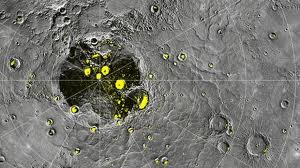
Evidence of water ice found at Mercury's poles

A NASA spacecraft has found further tantalizing evidence for the existence of water ice at Mercury's poles. Though surface temperatures can soar above 400 C, some craters at Mercury's poles are permanently in shadow, turning them into so-called cold traps.

Previous work has revealed patches near Mercury's poles that strongly reflect radar - a characteristic of ice. Now, the Messenger probe has shown that these radar-bright patches line up precisely with the shadowed craters. Messenger is only the second spacecraft - after Mariner 10 in the 1970s - to have visited the innermost planet.

Until Messenger arrived, large swathes of Mercury's surface had never been mapped. Maria Zuber, from the Massachusetts Institute of Technology, who is a co-investigator on the Messenger mission, said the most interesting interpretation of the radar observations is that they were due to water ice.

Saturday, March 3, 2012

3G vs 4G


3G vs 4G
3G is currently the world’s best connection method when it comes to mobile phones, and especially mobile Internet. 3G stands for 3rd generation as it  is just that in terms of the evolutionary path of the mobile phone industry. 4G means 4th generation. This is a set of standard that is being developed as a future successor of 3G in the very near future
.
The biggest difference between the two is in the existence of compliant technologies. There are a bunch of technologies that fall under 3G, including WCDMA, EV-DO, and HSPA among others. Although a lot of mobile phone companies are quick to dub their technologies as 4G, such as LTE, WiMax, and UMB, none of these are actually compliant to the specifications set forth by the 4G standard. These technologies are often referred to as Pre-4G or 3.9G.
4G speeds are meant to exceed that of 3G. Current 3G speeds are topped out at 14Mbps downlink and 5.8Mbps uplink. To be able to qualify as a 4G technology, speeds of up to 100Mbps must be reached for a moving user and 1Gbps for a stationary user. So far, these speeds are only reachable with wired LANs.
Another key change in 4G is the abandonment of circuit switching. 3G technologies use a hybrid of circuit switching and packet switching. Circuit switching is a very old technology that has been used in telephone systems for a very long time. The downside to this technology is that it ties up the resource for as long as the connection is kept up. Packet switching is a technology that is very prevalent in computer networks but has since appeared in mobile phones as well. With packet switching, resources are only used when there is information to be sent across. The efficiency of packet switching allows the mobile phone company to squeeze more conversations into the same bandwidth. 4G technologies would no longer utilize circuit switching even for voice calls and video calls. All information that is passed around would be packet switched to enhance efficiency.
Summary:
1. 3G stands for 3rd generation while 4G stands for 4th generation
2. 3G technologies are in widespread use while 4G compliant technologies are still in the horizon
3. 4G speeds are much faster compared to 3G
4. 3G is a mix of circuit and packet switching network while 4G is only a packet switching network


Read mo