Thursday, April 5, 2012

'Overeating may cause memory loss too'

Overeating has been linked to a host of health hazards like high blood pressure, diabetes and stroke. Conditions such as memory loss, dementia and even Alzheimer's may also be added to the list soon, according to a new study.
Preliminary findings of a study on ageing conducted by the Mayo Clinic indicate that overeating may greatly increase the risk of memory loss for elderly people.
The results found a correlation between caloric intake in the elderly and the onset of mild cognitive impairment (MCI) - the stage between normal age-related memory loss and early Alzheimer's disease.


In 2006, the Mayo Clinic chose a random sample of 1,233 people in Minnesota, aged between 70 and 89 years, with none previously diagnosed with dementia.
They asked the participants to fill out a questionnaire describing their diets over the previous year. On the basis of their answers, the researchers grouped the participants into three categories: those whose daily caloric consumption was between 600 and 1,526 calories; between 1,526 and 2,143; and between 2,143 and 6,000.
Each participant then underwent a series of MRI brain scans and cognitive tests. Correlating caloric intake with test performance, the researchers found the odds of having MCI more than doubled for those in the highest calorie-consuming group compared with those in the lowest calorie group.
"With MCI, the person is not demented. But when you test them on certain memory tests they do poorly as compared to their age-, education- and sex-matched peers," study author Yonas Geda was quoted as saying by Scientific American.
"We observed that a daily caloric intake in excess of 2,143 was associated with a significant chance of having MCI. If I am consuming more than 2,143 calories per day, my odds of having MCI is twice that of somebody that consumes 1,526 calories per day," Geda added. However, there are several caveats to these findings, said the researchers, who will present their findings at the annual meeting of the American Academy of Neurology in New Orleans in April.
For instance, the report did not take into account the types of food and beverages consumed nor did it examine the rate at which food was eaten throughout a day, Geda said. Geda acknowledged that the research to better understand the link between MCI and eating in the elderly is still preliminary, but he noted that it does create a foundation for more extensive cause-and-effect research they are currently pursuing.

Sunday, April 1, 2012

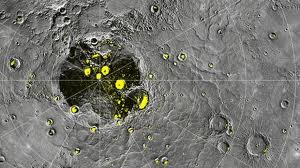
Evidence of water ice found at Mercury's poles

A NASA spacecraft has found further tantalizing evidence for the existence of water ice at Mercury's poles. Though surface temperatures can soar above 400 C, some craters at Mercury's poles are permanently in shadow, turning them into so-called cold traps.

Previous work has revealed patches near Mercury's poles that strongly reflect radar - a characteristic of ice. Now, the Messenger probe has shown that these radar-bright patches line up precisely with the shadowed craters. Messenger is only the second spacecraft - after Mariner 10 in the 1970s - to have visited the innermost planet.

Until Messenger arrived, large swathes of Mercury's surface had never been mapped. Maria Zuber, from the Massachusetts Institute of Technology, who is a co-investigator on the Messenger mission, said the most interesting interpretation of the radar observations is that they were due to water ice.

Saturday, March 3, 2012

3G vs 4G


3G vs 4G
3G is currently the world’s best connection method when it comes to mobile phones, and especially mobile Internet. 3G stands for 3rd generation as it  is just that in terms of the evolutionary path of the mobile phone industry. 4G means 4th generation. This is a set of standard that is being developed as a future successor of 3G in the very near future
.
The biggest difference between the two is in the existence of compliant technologies. There are a bunch of technologies that fall under 3G, including WCDMA, EV-DO, and HSPA among others. Although a lot of mobile phone companies are quick to dub their technologies as 4G, such as LTE, WiMax, and UMB, none of these are actually compliant to the specifications set forth by the 4G standard. These technologies are often referred to as Pre-4G or 3.9G.
4G speeds are meant to exceed that of 3G. Current 3G speeds are topped out at 14Mbps downlink and 5.8Mbps uplink. To be able to qualify as a 4G technology, speeds of up to 100Mbps must be reached for a moving user and 1Gbps for a stationary user. So far, these speeds are only reachable with wired LANs.
Another key change in 4G is the abandonment of circuit switching. 3G technologies use a hybrid of circuit switching and packet switching. Circuit switching is a very old technology that has been used in telephone systems for a very long time. The downside to this technology is that it ties up the resource for as long as the connection is kept up. Packet switching is a technology that is very prevalent in computer networks but has since appeared in mobile phones as well. With packet switching, resources are only used when there is information to be sent across. The efficiency of packet switching allows the mobile phone company to squeeze more conversations into the same bandwidth. 4G technologies would no longer utilize circuit switching even for voice calls and video calls. All information that is passed around would be packet switched to enhance efficiency.
Summary:
1. 3G stands for 3rd generation while 4G stands for 4th generation
2. 3G technologies are in widespread use while 4G compliant technologies are still in the horizon
3. 4G speeds are much faster compared to 3G
4. 3G is a mix of circuit and packet switching network while 4G is only a packet switching network


Read mo

Tuesday, September 6, 2011

NASA launching twin moon probes to measure gravity


This undated artist's rendering made available by NASA/JPL-Caltech shows the twin Gravity Recovery And Interior Laboratory (GRAIL) spacecraft which will map the moon's gravity field. Radio signals traveling between the two spacecraft provide scientists the exact measurements required as well as flow of information not interrupted when the spacecraft are at the lunar farside, not seen from Earth. The result should be the most accurate gravity map of the moon ever made. ??The mission also will answer longstanding questions about Earth's moon, including the size of a possible inner core, and it should provide scientists with a better understanding of how Earth and other rocky planets in the solar system formed. GRAIL is a part of NASA's Discovery Program. ??(AP Photo/NASA/JPL-Caltech)

CAPE CANAVERAL, Fla. (AP) — Four decades after landing men on the moon, NASA is returning to Earth's orbiting companion, this time with a set of robotic twins that will measure lunar gravity while chasing one another in circles.
By creating the most precise lunar gravity map ever, scientists hope to figure out what's beneath the lunar surface, all the way to the core. The orbiting probes also will help pinpoint the best landing sites for future explorers, whether human or mechanical.
Near-identical twins Grail-A and Grail-B — short for Gravity Recovery and Interior Laboratory — are due to blast off Thursday aboard an unmanned rocket.
Although launched together, the two washing machine-size spacecraft will separate an hour into the flight and travel independently to the moon.
It will be a long, roundabout trip — three to four months — because of the small Delta II rocket used to boost the spacecraft. NASA's Apollo astronauts used the mighty Saturn V rocket, which covered the approximately 240,000 miles to the moon in a mere three days.
NASA's Grail twins will travel more than 2 million miles to get to the moon under this slower but more economical plan.
The mission, from start to finish, costs $496 million.
The moon's appeal is universal.
"Nearly every human who's every lived has looked up at the moon and admired it," said Massachusetts Institute of Technology planetary scientist Maria Zuber, Grail's principal investigator. "The moon has played a really central role in the human imagination and the human psyche."
Since the Space Age began in 1957, 109 missions have targeted the moon, 12 men have walked its surface during six landings, and 842 pounds of rock and soil have been brought back to Earth and are still being analyzed.

In this Aug. 25, 2011 photo made available by NASA, technicians add a payload fairing to the Gravity Recovery And Interior Laboratory (GRAIL) booster at the Kennedy Space Center in Cape Canaveral, Fla. (AP Photo/NASA)

Three spacecraft currently are orbiting the moon and making science observations. A plan to return astronauts to the moon was nixed in favor of an asteroid and Mars.
Despite all the exploration, scientists still don't know everything about the moon, Zuber noted. For example, its formation still generates questions — Grail's findings should help explain its origin — and its far side is still mysterious.
"You would think having sent many missions to the moon we would understand the difference between the near side and the far side, but in fact we don't," she said.
Recent research suggests Earth may have had a second smaller moon that collided with our present moon, producing a mountainous region. The Grail mission may help flush out that theory, Zuber said.
Grail-A will arrive at the moon on New Year's Eve, followed by Grail-B on New Year's Day. They will go into orbit around the lunar poles and eventually wind up circling just 34 miles above the surface.
For nearly three months, the spacecraft will chase one another around the moon, meticulously flying in formation. The distance between the two probes will range from 40 miles to 140 miles. Radio signals bouncing between the twins will provide their exact locations, even on the far side of the moon.
Scientists will be able to measure even the slightest variations in the gap between orbiting Grail-A and Grail-B — every single second. These subtle changes will indicate shifting masses below or at the lunar surface: mountains in some places, enormous lava tubes and craters in others.
The moon actually has the most uneven gravitational field in the solar system, according to NASA. The moon's gravity is about one-sixth Earth's pull.
"We measure the velocity change between the two spacecraft to a couple of fractions of a tenth of a micron per second. It is an extremely accurate measurement that has to be made," Zuber said.
A tenth of a micron is about half the size of a red blood cell.
By the time their science mission ends in late spring, Grail-A and Grail-B will be within 10 miles of the lunar surface. Barring a change in plans, they will crash into the moon.
Each spacecraft holds one science instrument— for sending and receiving radio signals between the two — as well as a digital video camera system, MoonKAM, intended for use by middle school students worldwide. Sally Ride, the first American woman in space, and her science education company in San Diego is leading the photo-gathering effort. It's billed as "eyes on the moon for Earth's students."
This is NASA's second robotic mission to be launched since the end of the shuttle program in July. A probe named Juno is headed for Jupiter following an Aug. 5 liftoff.
NASA officials will be thrilled if Grail generates even a portion of the immense interest ignited by the Juno launch. A large crowd is expected at Cape Canaveral for Thursday's morning liftoff, which features a pair of split-second launch windows a half-hour apart.
"We're just delighted by the way the country is responding to these exciting missions," said Jim Green, director of NASA's planetary science division.

Thursday, August 11, 2011

Put the glass down!


A professor began his class by holding up a glass with some water in it. He held it up for all to see and asked the students,' How much do you think this glass weighs?'

'50gms!'.... '100gms!'.....'125gms'...the students answered.

What would happen if I held it up like this for a few minutes?

'Nothing' the students said.

'Ok what would happen if I held it up like this for an hour?' the professor asked.

'Your arm would begin to ache' said one of the students.

You're right, now what would happen if I held it for a day?'

'Your arm could go numb, you might have severe muscle stress and paralysis and have to go to hospital for sure!' ventured another student and all the students laughed.

'Very good. But during all this, did the weight of the glass change?’ asked the professor.

'No'

'Then what caused the arm ache and the muscle stress?'

'Put the glass down!' said one of the students.

'Exactly!' said the professor.' Life's problems are something like this.Hold it for a few minutes in your head and they seem OK. Think of them for a long time & they begin to ache. Hold it even longer and they begin to paralyze you.'

It's important to think of the challenges (problems) in your life, but EVEN more important to 'put them down' at the end of every day before you go to sleep. That way, you are not stressed, you wake up every day fresh and strong & can handle any issue, any challenge that comes your way!

So, when you leave office today, remember to 'PUT THE GLASS DOWN TODAY!'

Tuesday, June 7, 2011

WHO says cell phone use can cause brain cancer

           Using a mobile phone may increase the risk of certain types of brain cancer in humans and consumers should consider ways of reducing their exposure, World Health Organisation (WHO) cancer experts said on Tuesday.

       A working group of 31 scientists from 14 countries meeting at the WHO's International Agency for Research on Cancer (IARC) said a review of all the available scientific evidence suggested cell phone use should be classified as "possibly carcinogenic".

          The classification could prompt the U.N. health body to look again at its guidelines on mobile phones, the IARC scientists said, but more research is needed before a more definitive answer on any link can be given.
The WHO had previously said there was no established evidence for a link between cell phone use and cancer.

       "After reviewing essentially all the evidence that is relevant ... the working group classified radiofrequency electromagnetic fields as possibly carcinogenic to humans," Jonathan Samet, chair of the IARC group, said in a telebriefing.

         He said some evidence suggested a link between an increased risk for glioma, a type of brain cancer, and mobile phone use.

         The decision comes after a study published last year which looked at almost 13,000 cell phone users over 10 years found no clear answer on whether the mobile devices cause brain tumours.

         The decision has been keenly awaited by mobile phone companies and by campaign groups who have raised concerns about whether cell phones might be harmful to health
.
          Use of cell phones use has increased dramatically since their introduction in the early-to-mid 1980s. About 5 billion mobile phones are currently in use worldwide.